
Offshore Energies UK campaign
Back North Sea oil and gas. Not imports.
Britain is about to have a new Prime Minister. This is the right time to reset energy policy. We will continue to need oil and gas for decades to come. The question is simple. Do we produce more of it here at home, supporting our workers and communities, jobs and tax revenues, or do we import more from overseas?
Opinium, 2,050 UK adults, July 2026
The public has already answered the question. Nearly nine times as many people want homegrown production as say the source does not matter.
The choice
We will use oil and gas either way. The only question is who produces it.
Right now we are importing more than 40% of our energy. Those imports support jobs and tax revenues elsewhere, not here. Meanwhile our own offshore workforce keeps delivering the energy the country relies on every day, while building the technologies and infrastructure the energy transition needs.
Produced here
We make it in our own waters
Value stays in the country. Skills stay in the country. The supply chain that will build the transition stays intact and stays busy.
- Jobs and communities across our nations and regions
- Billions of pounds a year in tax revenue for the Chancellor
- Supply chains that also deliver wind, hydrogen and carbon capture
- Lower emissions than the same barrels shipped in from overseas
- Industrial capability we control
Imported
Someone else makes it and we buy it
Imports will always play a part in our energy system. They should complement what we produce, not replace it.
- Jobs supported in other countries
- Tax revenues collected by other treasuries
- Greater exposure to decisions made elsewhere
- Higher emissions from shipped fuels
- Industrial capability we lose and cannot easily rebuild
Jobs and communities
Homegrown energy supports the people and places that have powered this country for generations.
A growing economy
Homegrown energy creates value that is redistributed across our nations and regions.
Energy security
Homegrown energy means fewer decisions about our supply are taken in volatile regions far away.
The evidence
The public has already answered
Independent polling by Opinium, commissioned by Offshore Energies UK, put the choice to the country in the days before the new Prime Minister takes office. The answer is not close, and it does not change when you look only at the government's own voters.
Nationally representative sample of 2,050 UK adults, weighted to be politically and nationally representative.
Q5
Produce it here, or bring it in
If the UK needs oil and gas for its energy needs, which statement comes closest to your view?
The UK should produce as much as it can from its own waters, rather than relying on imports from abroad
It does not matter where our oil and gas comes from
Neither 9%. Don't know 13%.
Nearly nine times as many people want homegrown production as say the source does not matter.
Q8
Follow Norway, or hold the ban
Norway continues to issue new licences for exploration and development. The UK bans new licences but allows existing fields to keep operating. Which approach should the UK take?
Allow new licences for oil and gas exploration and development
Continue the ban on new licences
Don't know 27%.
Twice as many people back the Norwegian approach as back the current UK ban.
Q7
The next five years
Over the next five years, does the UK need to continue producing oil and gas from the North Sea, or can it meet its energy needs without it?
The UK needs to continue producing from the North Sea
The UK does not need to continue producing from the North Sea
Don't know 18%.
A third of the public say the UK definitely needs continued North Sea production.
Q2
Still essential
To what extent do you agree or disagree that oil and gas are essential for the foreseeable future?
Agree that oil and gas are essential for the foreseeable future
Disagree
Neither 16%. Not sure 5%.
The public has already accepted the premise the policy debate keeps avoiding.
Q2b
The economic reality
To what extent do you agree or disagree that it would not be possible to stop using oil and gas in the UK without significantly damaging the economy?
Agree that stopping would significantly damage the economy
Disagree
Neither 19%. Not sure 8%.
Six in ten link the fate of the sector to the health of the wider economy.
Q6
The pace of net zero
Should the UK's drive to net zero happen gradually, or as quickly as possible even if this means greater short term impacts on jobs and energy supplies?
Gradually, to reduce the impact on jobs and energy supplies
As quickly as possible, even if this hits jobs and energy supplies
None of the above 11%. Don't know 17%.
Support for net zero is not in question. The speed and the cost of getting there is.
Q1
How the industry is seen
How favourable or unfavourable are you towards the UK's oil and gas industry?
Favourable towards the UK oil and gas industry
Unfavourable
Not sure or no opinion 31%.
Three in ten hold no view either way. There is work for us to do here.
Boosted sample of 1,000 people who voted Labour at the 2024 general election.
Q5
Produce it here, or bring it in
If the UK needs oil and gas for its energy needs, which statement comes closest to your view?
The UK should produce as much as it can from its own waters, rather than relying on imports from abroad
It does not matter where our oil and gas comes from
Neither 12%. Don't know 10%.
Almost seven in ten Labour voters want homegrown production. The government's own supporters are already there.
Q8
Follow Norway, or hold the ban
Norway continues to issue new licences for exploration and development. The UK bans new licences but allows existing fields to keep operating. Which approach should the UK take?
Allow new licences, as Norway's Labour government does
Continue the ban on new licences
Don't know 23%.
More Labour voters back new licences than back the ban. The centrepiece of current policy does not command a majority of the party's own voters.
Q7
The next five years
Over the next five years, does the UK need to continue producing oil and gas from the North Sea, or can it meet its energy needs without it?
The UK needs to continue producing from the North Sea
The UK does not need to continue producing from the North Sea
Don't know 15%.
Well over twice as many Labour voters say keep producing as say stop.
Q2
Still essential
To what extent do you agree or disagree that oil and gas are essential for the foreseeable future?
Agree that oil and gas are essential for the foreseeable future
Disagree
Neither 16%. Not sure 3%.
On the fundamentals, Labour voters look much like the country as a whole.
Q2b
The economic reality
To what extent do you agree or disagree that it would not be possible to stop using oil and gas in the UK without significantly damaging the economy?
Agree that stopping would significantly damage the economy
Disagree
Neither 19%. Not sure 7%.
Nearly six in ten Labour voters see the economic risk of moving too fast.
Q6
The pace of net zero
Should the UK's drive to net zero happen gradually, or as quickly as possible even if this means greater short term impacts on jobs and energy supplies?
Gradually, to reduce the impact on jobs and energy supplies
As quickly as possible, even if this hits jobs and energy supplies
None of the above 6%. Don't know 10%.
Labour voters are more ambitious on pace than the country as a whole, and a majority still want jobs and supplies protected.
Q1
How the industry is seen
How favourable or unfavourable are you towards the UK's oil and gas industry?
Favourable towards the UK oil and gas industry
Unfavourable
Not sure or no opinion 26%.
Labour voters are split on the industry itself, and clear on the policy. People can hold both.
What the numbers mean for the next government.
David Whitehouse, Chief Executive, Offshore Energies UK
The voters have had enough
This compelling new data shows that the British public are looking for huge change in energy policy from the new Prime Minister. Declining homegrown oil and gas production in the North Sea has increased UK exposure to imports and geopolitical risk. All corners of the UK population are looking for change, including the government's own core supporters. Domestic production is less carbon intensive, supports the energy transition, produces billions of pounds of tax revenues for the Chancellor, and builds industrial resilience across the country, making us all more secure. We need an energy policy reset to back North Sea oil and gas, not imports.
Read one
This is not a divided country
On the central question the public is not close to split. 71% want us to produce as much as we can from our own waters. 8% say the source does not matter. The gap holds across every region, every age group and both sides of the 2016 referendum. Energy policy is being made as though this argument is finely balanced. It is not.
Read two
Labour voters want the Norwegian answer
The ban on new licences is the centrepiece of current energy policy, and it does not command a majority among the people who put this government in office. More Labour voters back new licences, as Norway's Labour government allows, than back the ban. Norway has a cross party consensus for continued development alongside the build out of renewables. There is nothing radical in what we are asking for.
Read three
Support for net zero is not the issue. The route is.
Half the country wants the drive to net zero to happen at a pace that protects jobs and energy supplies. Two thirds say oil and gas are essential for the foreseeable future. That is not opposition to the transition. It is a request for one that is built on our industrial strengths rather than one that replaces domestic energy with imported energy.
Methodology. Opinium polled a nationally representative sample of 2,050 UK adults between 7 to 10 July 2026, weighted to be politically and nationally representative. The survey was boosted to 1,000 people who voted Labour at the 2024 general election. Project references UK30528 and UK30529. Opinium Research is a member of the British Polling Council and abides by its rules. Percentages are rounded and may not total 100. For the full breakdown of results, contact [email protected].
Read the press releaseThe joint letter
A credible energy transition cannot be delivered by replacing one source of domestic energy with a growing dependence on imports.
From the open letter to the Parliamentary Labour Party, delivered at Westminster on 14 July 2026.
Fourteen organisations from offshore energy, chemicals, engineering, shipping, aggregates and construction materials, together with the trade unions that represent the workforce, put their names to one message. Where things are made and who makes them matters. Support for the North Sea is a signal that this country remains committed to producing, building and manufacturing, and that government backs the people and places that have powered it for generations.
Signed by 14 organisations
- David Whitehouse Offshore Energies UK Chief Executive
- Gary Smith GMB General Secretary
- Steve Elliott Chemical Industries Association Chief Executive Officer
- Elizabeth de Jong Fuels Industry UK Chief Executive Officer
- Ann Joss National Union of Rail, Maritime and Transport Workers RMT Organiser Scotland
- Rhett Hatcher UK Chamber of Shipping Chief Executive Officer
- Martin Casey Mineral Products Association Senior Director, Cement and Lime
- Russell Borthwick Aberdeen & Grampian Chamber of Commerce Chief Executive
- Kevin Keable East of England Energy Group Chair
- Stuart Clow International Association of Drilling Contractors Regional Director, North Sea Chapter UK
- Joanne Leng MBE NOF Chief Executive
- Neil Gordon Global Underwater Hub Chief Executive
- Peter Aylott British Rig Owners Association Director
- Stuart Broadley Energy Industries Council Chief Executive Officer
On the ground
The banner went up offshore. The message went into Westminster.
Workers across offshore installations and onshore industrial sites raised the same banner on the same day, while industry leaders, trade unions, apprentices and offshore workers took the letter to Parliament. To everyone who stood together, thank you. You keep the energy this country needs flowing 24 hours a day, safely and responsibly.

The coalition delivers the joint letter to Labour MPs at Westminster.
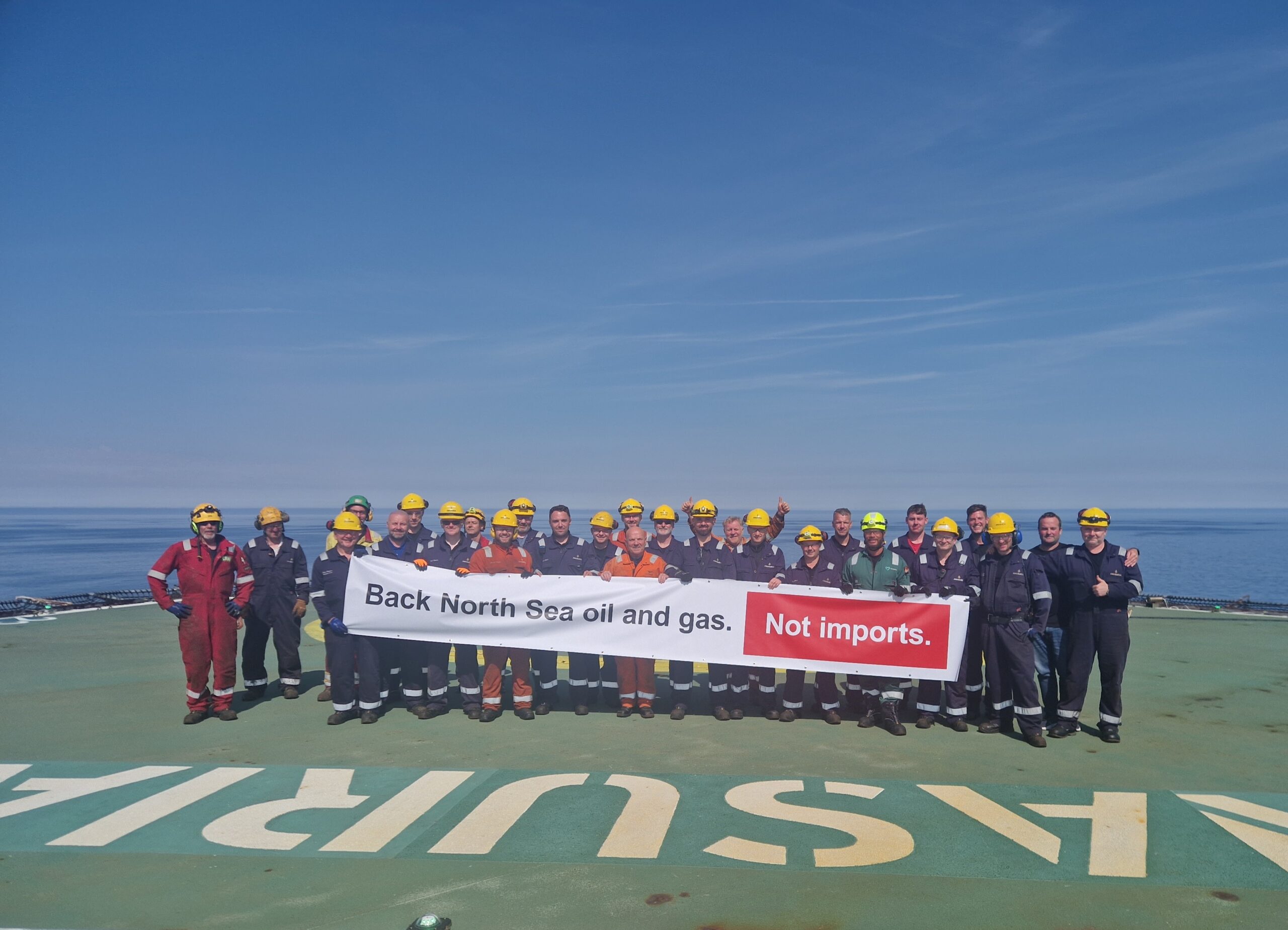
Crew on the Anasuria FPSO back the campaign.
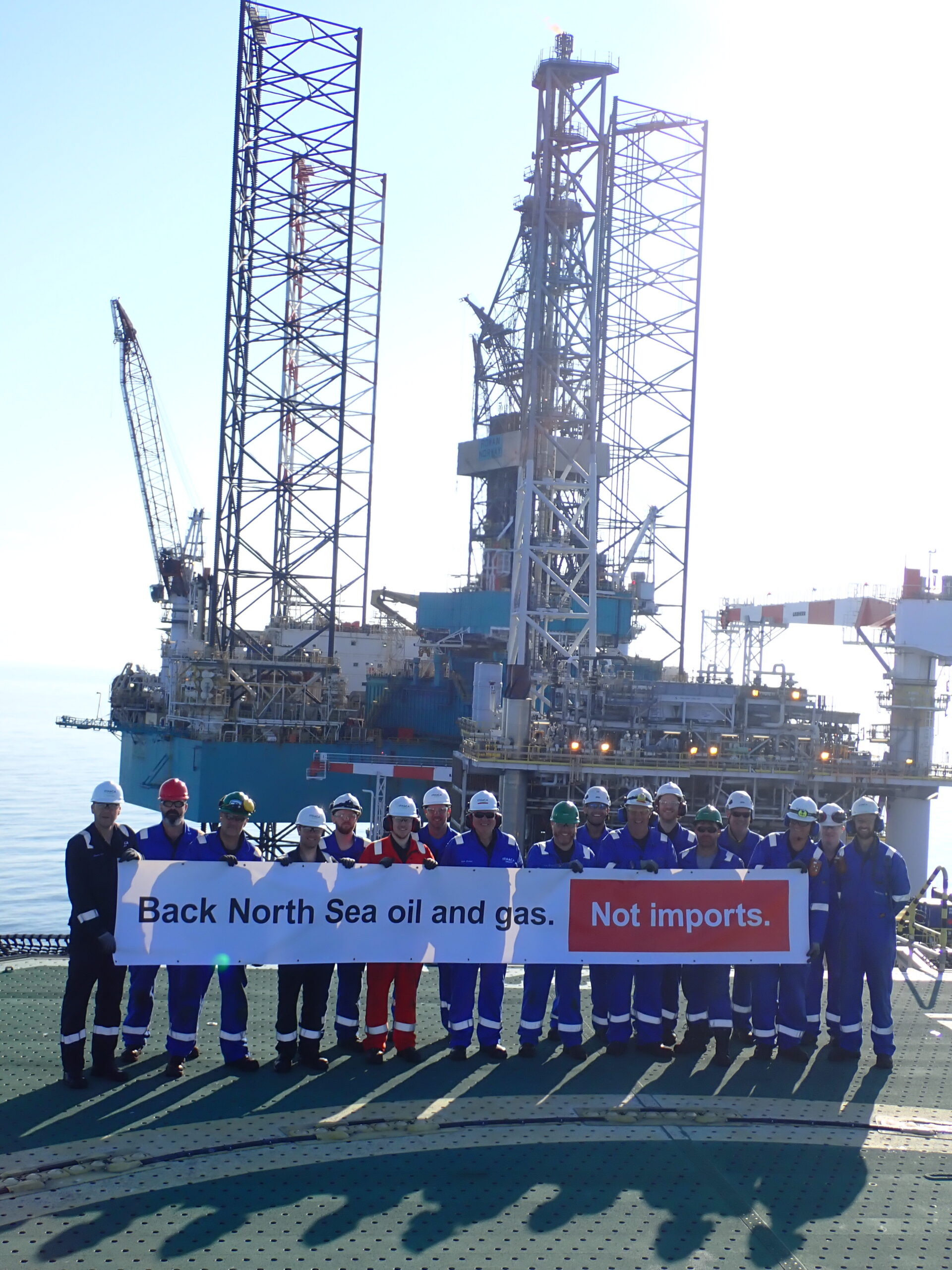
The banner goes up on an offshore installation.
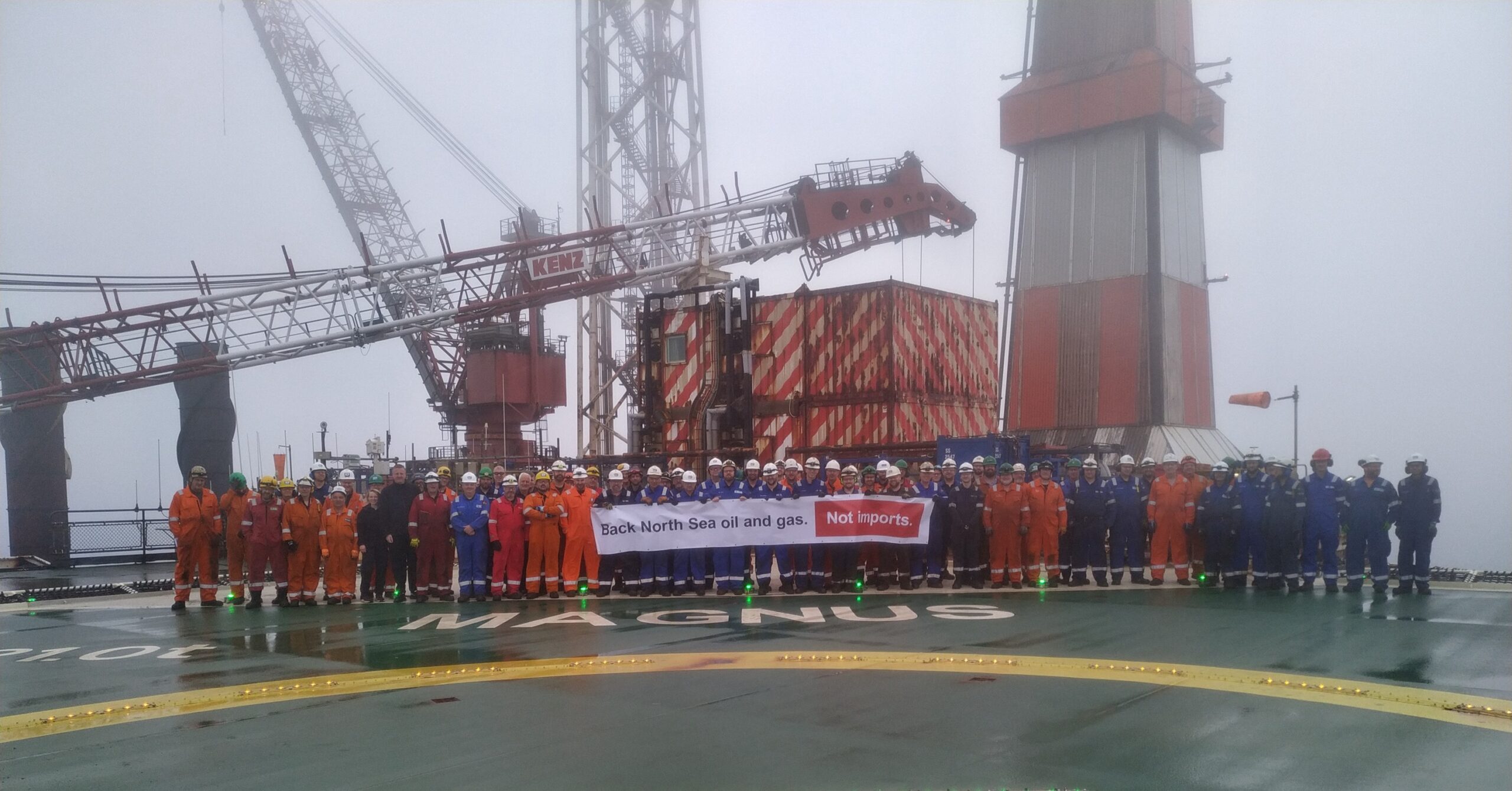
EnQuest offshore workers with the campaign banner.
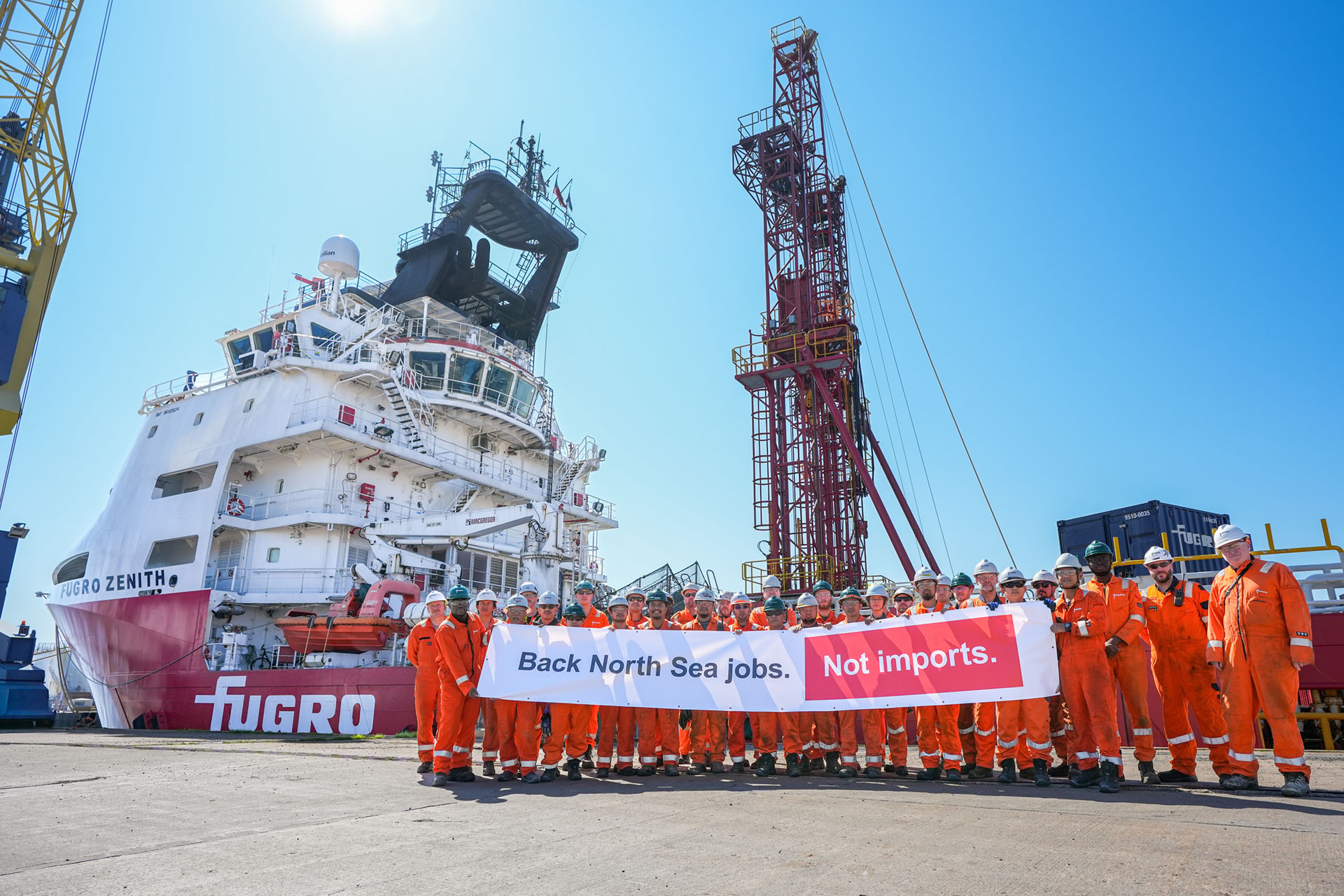
Fugro and Harbour Energy colleagues join the message.

Industry leaders and parliamentarians at the campaign roundtable.

Offshore workers and apprentices at Westminster.
Back the campaign
Add your voice
If we are going to use oil and gas, let's produce more of it here, alongside accelerating our world class renewables and low carbon technologies. Share the message, send the letter to your MP, and tell us what the campaign means where you work.
Back North Sea oil and gas. Not imports. New Opinium polling shows 71% of the public want the UK to produce as much of its own oil and gas as it can, rather than rely on imports from abroad. Just 8% say it does not matter where it comes from. Twice as many people back Norway's approach of allowing new licences (49%) as back the current UK ban (24%). Homegrown energy supports our jobs and communities. Homegrown energy helps grow our economy. Homegrown energy strengthens our energy security. #BacktheNorthSea #OffshoreEnergiesUK #OEUK Read more: https://oeuk.org.uk/who-we-are/industry-campaigns/back-the-north-sea/