
MBY Consultants Ltd.
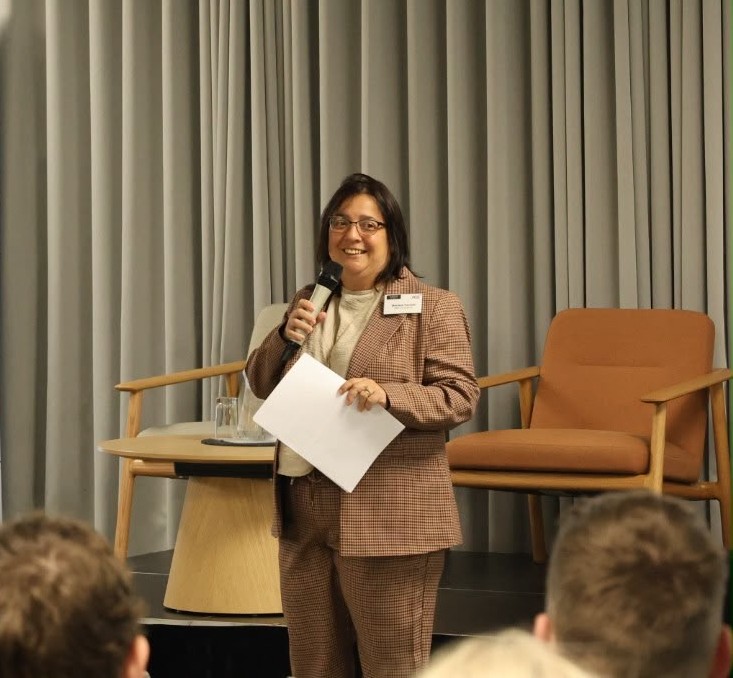
Mariana Yarnold, Founder and Managing Director

About you
MBY Consultants helps organisations prevent commercial problems from becoming delivery problems. We work across energy, nuclear, defence, infrastructure and manufacturing, supporting clients with commercial strategy, contract management, governance, mobilisation and programme recovery. What sets us apart is that we do not simply produce recommendations and leave. We work alongside client teams, strengthening their systems, decision-making and internal capability.
Our approach, Commercial Architecture™, looks at how contracts, risk, programme controls, procurement, governance and people work together. This allows us to identify weaknesses that may be invisible when each function is considered separately.
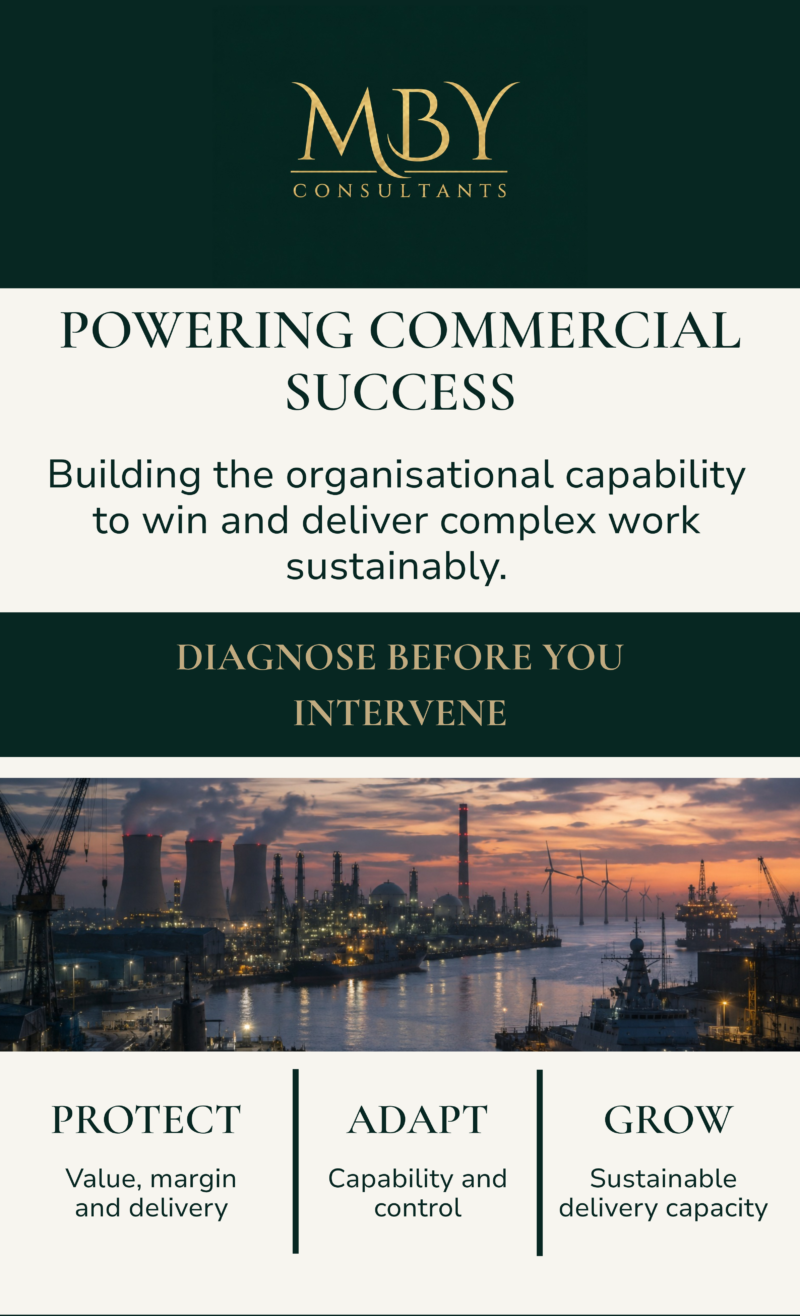
MBY is deliberately senior-led, practical and independent. Our purpose is simple: to help organisations protect what they have, adapt to change and grow sustainably.
We are currently strengthening our Commercial Architecture™ methodology, which helps organisations understand how contracts, governance, risk, procurement, programme controls and people interact across complex delivery environments. This work supports our mission by giving businesses a clearer way to identify weaknesses early, make better decisions and build lasting internal capability.
We are also working to connect the expertise of North East Scotland with new investment, partnerships and international markets. Aberdeen has an exceptional concentration of skills developed through oil and gas that can support offshore wind, hydrogen, carbon capture, nuclear, maritime operations, manufacturing and major infrastructure. A key part of this work is bringing established businesses, SMEs, entrepreneurs, investors, policymakers and international partners into the same conversation. Sustainable growth depends on connecting credible ideas with capital, capability and routes to market.
Together, these projects reflect MBY’s wider vision: helping organisations protect what they have built, adapt their capabilities to changing markets and create the commercial foundations for sustainable growth.
The greatest opportunity is the scale of transferable capability already present in the UK energy supply chain. The people, systems and technologies developed for complex offshore operations can support new energy, maritime, industrial and infrastructure markets in the UK and internationally. For MBY, this creates opportunities to support organisations as they enter unfamiliar markets, develop new partnerships and strengthen the commercial structures behind investment and delivery.
The challenge is that capability can be lost more quickly than it can be rebuilt. Continued policy uncertainty, delayed investment decisions, poor allocation of contractual risk and pressure on SMEs all affect confidence and capacity. Businesses cannot retain specialist teams indefinitely while waiting for projects to proceed. The transition therefore needs to be commercially deliverable, not simply strategically desirable. That means creating investable opportunities, improving visibility of future work and bringing operators, supply chains, investors and government into the same conversation early enough to influence outcomes.
About your OEUK membership
OEUK membership gives MBY access to a network that represents the breadth of the offshore energy industry, from major operators to specialist supply-chain businesses.
For a consultancy focused on commercial delivery, the value lies in understanding what organisations are experiencing across the market, not simply what is being reported at policy level. OEUK’s forums, briefings, publications and events provide insight into investment, supply-chain pressures, regulation, workforce capability and emerging opportunities.
Membership also gives MBY a platform to contribute our own perspective. We see commercial structures, procurement behaviour and risk allocation as fundamental to the industry’s ability to attract investment and deliver the transition.
Just as importantly, OEUK helps connect businesses that may not otherwise meet. Those relationships matter when companies are looking for partners, entering new markets or adapting established expertise to different sectors and international opportunities.
MBY joined OEUK in June 2026, so we are still at the beginning of our formal engagement with its programme of events and member activities. We are particularly interested in the OEUK Legal Conference and Dinner because contractual structures, governance and the allocation of risk have such a significant effect on project outcomes. Later in the year, we are looking forward to the Aberdeen Breakfast Briefing.
For MBY, these events are valuable because they bring together the people who shape policy, fund projects, procure work and ultimately deliver it.
As a relatively new member, MBY is prioritising engagement with the Commercial Managers Forum and the Supply Chain Forum.
The Commercial Managers Forum is particularly aligned with our work because commercial behaviour, collaboration and early problem-solving directly affect delivery performance. The Supply Chain Forum provides an important space for operators, contractors and suppliers to discuss the practical conditions businesses need in order to invest, retain capability and grow.
What we value most is the opportunity for informed discussion between people who understand the realities of delivery. The strongest forums do more than exchange information. They allow members to challenge assumptions, share experience and contribute to practical improvements across the industry.
Future of industry
What notable changes towards achieving net-zero emissions have you observed in our industry in recent years?
The most notable change is that net zero is increasingly being considered as part of operational and investment decision-making rather than as a separate sustainability initiative. We are seeing greater attention to emissions measurement, methane reduction, electrification, carbon capture and storage, offshore wind, hydrogen and the reuse or repurposing of existing infrastructure. There is also growing recognition that decommissioning should consider circularity, material recovery and the future value of assets and infrastructure.
Another important change is the emphasis on transferable capability. The transition is no longer discussed solely in terms of replacing one technology with another. There is greater recognition that the people, engineering expertise, supply chains and operational experience developed through oil and gas will be essential to delivering future energy systems.
Progress remains uneven, however. Ambition must now be matched by investable projects, timely decisions and commercial arrangements that allow the supply chain to participate sustainably.
MBY contributes by strengthening the commercial foundations on which transition projects depend.
New technology alone does not deliver successful projects. Organisations also need appropriate contracts, realistic risk allocation, effective governance, capable supply chains and reliable programme controls. Our work helps clients identify weaknesses early, structure delivery more effectively and retain control as projects become more complex.
We also help businesses understand how existing capabilities can be adapted for new sectors and markets. This is particularly important for SMEs that may have valuable experience but need clearer routes into emerging energy, maritime or infrastructure opportunities.
A further part of our contribution is bringing together organisations that need to understand one another: established industry, SMEs, entrepreneurs, investors, public bodies and international partners. Connecting capability with capital and credible market opportunities is essential if the transition is to generate sustainable economic value as well as lower emissions.
In 20 years, we expect the industry to operate as a far more integrated energy system. Oil and gas will form a smaller and lower-carbon part of the energy mix, but the infrastructure, skills and supply chains built around the sector will continue to have value. Offshore wind, carbon capture and storage, hydrogen, electrification and other technologies will increasingly share infrastructure, data, people and industrial capability. The distinction between an oil and gas company, an offshore energy company and an infrastructure business will become less pronounced. Organisations will be managing portfolios of interconnected assets, technologies and contractual relationships.
Aberdeen can remain a leading international energy centre, but this cannot be taken for granted. It will depend on retaining skills, supporting SMEs, attracting investment and exporting the region’s capability into global energy and maritime markets. The successful businesses will be those that can adapt without losing commercial discipline. Technology will change, but strong governance, informed decisions and the ability to manage risk across complex relationships will remain fundamental.
Find out more about MBY Consultants Ltd: